

Equipment
Publié le
|
22/10/2026

Equipment and supplies for 156 deaf children - Neema Ephphatha Primary School

Problem/ Context

Lack of fuel for school transport; lack of school materials and equipment; lack of teacher training; lack of training and capacity-building for pupils; inadequate school infrastructure; lack of clothing and school supplies; lack of financial and material support; and the need to protect and promote the rights of deaf children

‍

Detailed project description

EDUCATION SUPPORT PROJECT / INCLUSION

Project to support the inclusive education of deaf children in primary schoolLocation: Goma, North Kivu, Democratic Republic of the Congo

Number of pupils: 156
Number of teachers: 12
Duration: To be determined
‍

⁠Context and rationale
Access to quality education is a fundamental right for every child, including deaf children and children with disabilities. However, families’ financial difficulties and a lack of appropriate teaching resources can limit school attendance and the quality of learning. This project aims to improve learning conditions for the 156 pupils and working conditions for the 12 teachers, through support in the form of fuel for the school bus, teaching materials, uniforms and school supplies.
2.⁠ ⁠Overall objectiveTo contribute to improving access to inclusive, high-quality education for deaf children in primary school.
3. ⁠ ⁠Specific objectives
•⁠  ⁠Ensure the continuity of school transport by ensuring the availability of fuel.
•⁠  ⁠Provide teaching materials to the 12 teachers and pupils.
•⁠  ⁠Facilitate access to school uniforms for the 156 pupils.
• ⁠  ⁠Provide the necessary school supplies.
•⁠  ⁠Strengthen inclusive teaching practices, particularly the use of visual aids and sign language.

4.⁠ ⁠Beneficiaries
•⁠  ⁠Direct beneficiaries: 156 pupils and 12 teachers.
• ⁠  ⁠Indirect beneficiaries: families, the school management and the community.

5.⁠ ⁠Main activities
1. ⁠ ⁠Identify and confirm the needs of the 156 pupils and 12 teachers.
2.⁠ ⁠Purchase the fuel required to run the school bus.
3.⁠ ⁠Purchase and distribute school uniforms.
4.⁠ ⁠Purchase school supplies.
5. ⁠ ⁠Procure appropriate teaching materials.
6.⁠ ⁠Monitor purchases and distribution.
7.⁠ ⁠Prepare a narrative and financial report.

6.⁠ ⁠Indicative provisional budget
The budget below is an initial estimate to be validated on the basis of local prices and actual needs.No. | Description| Quantity| Estimated unit cost| Total USD1| Fuel for the school bus| Lump sum| $600| $6002| School uniforms| 156 pupils| $20| $3,1203| Exercise books and school supplies| 156 kits| $15| $2,3404| Teaching materials for teachers| 12 kits| $50| $6005| Adapted visual and teaching aids| Lump sum| $400| $4006| Transport and distribution of materials| Lump sum| $150| $150| ESTIMATED GRAND TOTAL| | | $7,210

DESCRIPTION
QUANTITYUNIT COST ESTIMATED ITEMISED TOTAL USD

01 Fuel for the school bus Flat rate $3,800 $3,800$
02 School uniforms| 156 pupils| $20| $3,120156 pupils $20$3,120$
03| Exercise books and school supplies|156 kits $15 $2,340$
04 Teaching materials for teachers| 12 kits| $50| $600|
05 Adapted visual and teaching aids| Fixed cost $400| $400|
06 Transport and distribution of materials| Fixed cost $150| $150|
07 ESTIMATED GRAND TOTAL| $8,070|

Note: the amounts are indicative. The fuel allowance will need to be calculated based on the bus’s fuel consumption, the routes and the duration of the project. Uniforms and school supplies will be adjusted according to families’ needs and local market prices.

‍
7.⁠ ⁠Expected outcomes
•⁠  ⁠The 156 pupils benefit from better learning conditions.
• ⁠  ⁠Priority needs for school uniforms and stationery are met.
•⁠  ⁠The 12 teachers have access to appropriate teaching resources.
•⁠  ⁠School transport is supported within the limits of available resources.
• ⁠  ⁠School attendance among deaf children is improved.

8.⁠ ⁠Monitoring and evaluation
The school management and project leaders will monitor the activities. Supporting documents, lists of beneficiaries, invoices and distribution reports will be used to verify the use of funds.

9.⁠ ⁠Conclusion
The support requested will help to strengthen inclusive education and improve learning conditions for deaf children. Mobilising financial and technical partners is essential to meet the school’s priority needs.
‍

Done at Goma, on: 22 October

Informations générales
Project applicant
KAZINGUFU STANISLAS
Coordinateur
Contacts
School name

Neema Ephphatha Primary School

Location (village, region)
Goma
Project category

Equipement

Required Materials and Equipment
Renovation icone
Renovation and Restoration

Classrooms

Construction icone
Installations scolaires

Visual aids
Sign language equipment.

Construction icone
Equipment, Materials, and Furniture

60 packs of teaching materials,
156 kits of school uniforms and stationery.
30 sets of teaching materials
156 kits of materials for deaf children

Main needs

Building renovation,School facilities

Target learners

156 pupils and 12 teachers

Coût du projet

Project status

School Photos

Les autres projets de construction

Retrouvez tous les projets en cours

School image description

Vision Academy of Excellence is a Christ-centred, non-profit educational institution located in Wantik, New London, Freetown, Sierra Leone. The school faces a significant infrastructure challenge that limits its capacity to provide quality education to children in the surrounding community.Wantik is a rapidly growing community characterised by mountainous terrain, hills, and valleys. According to information obtained from the community headman through a recent community development survey, the community has approximately 2,000 school-age children, of whom an estimated 50 – 60% are of preschool and primary school age.

However, access to conveniently located educational facilities remains a concern, as nearby government schools are approximately 30–40 minutes away, depending on the distance travelled by individual pupils. This situation creates additional difficulties for younger children who must travel considerable distances to access education.Although Vision Academy of Excellence is already operational and committed to serving the educational needs of the community, the lack of a purpose-built school building presents a major obstacle to its growth and development. Without adequate classrooms and essential educational facilities, the institution faces limitations in accommodating more pupils and providing a suitable environment for effective teaching and learning.

The school urgently requires a permanent, well-designed facility that will provide sufficient classroom space and essential support services. The proposed project involves constructing

  • a 12-classroom school building
  • an administrative office,
  • a staff room, and
  • two toilet facilities.

These facilities will promote effective teaching, improve school management, support independent learning, and enhance sanitation and pupil welfare.The absence of adequate infrastructure threatens the school’s ability to respond effectively to the growing demand for accessible education in Wantik and neighbouring communities. The proposed construction project will therefore address a critical educational infrastructure gap while creating opportunities for more children to access a safe, supportive, and conducive learning environment.Through this project, Vision Academy of Excellence seeks to strengthen educational access, promote academic excellence, moral values, spiritual capacity and character development, and establish a sustainable institution capable of contributing meaningfully to the educational and social development of the community.

Project overview ->
School image description

The school has many children and few classrooms, hence some classes have almost seventy students in one class. This leads to poor perfomance since the teacher cannot manage such big number. The total number of students is 1756.

Project overview ->
School image description

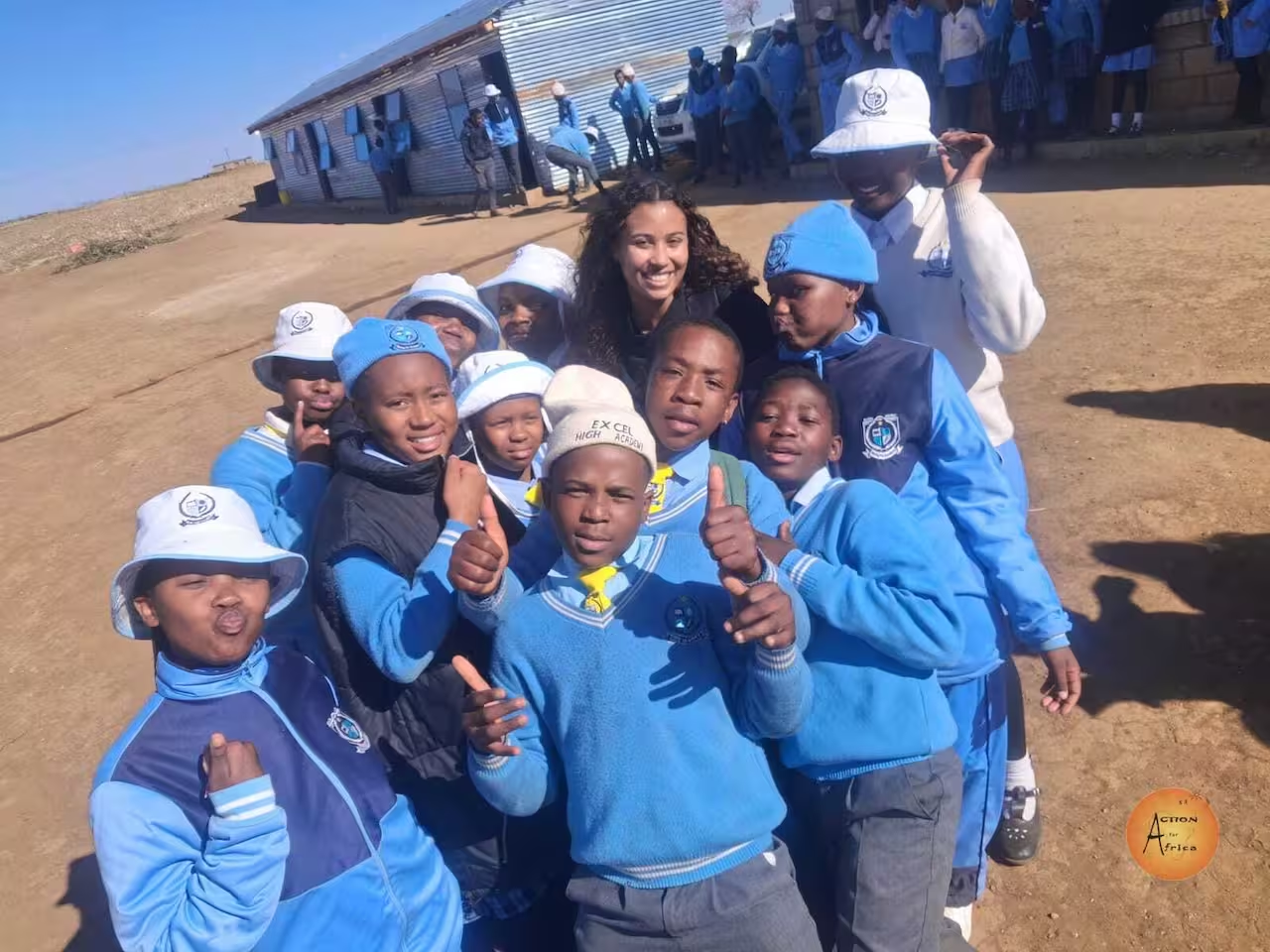
We are a rural school in Lesotho, Excel High Academy. Our school does not have proper buildings that meet the required standards for final examinations. Because of this, our students are forced to travel long distances from our rural area to urban centres to write their final examinations.This long-distance travel causes high transport costs for parents, safety risks for learners, and stress that affects their performance in examinations.

We are therefore seeking support to build a proper examination hall / permanent classrooms at our school premises, so that our learners can write their examinations in a safe, dignified and conducive environment at their own school.

Project overview ->