

Le programme vise à favoriser l'accès à l'Education pour les enfants des villages et zones reculées.
L'objectif principal est de construire de nouvelles salles de classes ou rénover les écoles délabrées situés dans ces zones.
Activités : La construction et de rénovation des salles de classes.
Les travaux de maçonnerie, de peinture, de menuiserie, de plomberie... L'installation de latrines de toilettes et de fontaines à eau..
Pour soumettre un projet école . Le lien du formulaire d'inscription ci-après.
Une sélection sera faite par la suite. Pour tout renseignement, veuillez svp visiter La Foire Aux questions

Le fonds Action Education est actuellement en cours de constitution.
Il s'élève à 5 000 000 $USD soit environ 3 milliards de FCFA, pour la période 2025 à 2030. Ce financement, assuré par les membres et partenaires couvrira l'ensemble des activités prévues dans le cadre du programme.
We need six additional buildings to develop a complete primary school and provide children with proper access to education. Many children in our community are at risk of growing up without an education, losing opportunities, direction and hope for a better future simply because we lack adequate educational facilities.The nearest primary school from Olpopongi is approximately 9 kilometres away. There is a large river between the village and the school, which becomes difficult and sometimes impossible for children to cross during the rainy season. Our area is also home to wild animals, including elephants, which can pose a serious danger to children travelling long distances on foot.These challenges make accessing education extremely difficult and sometimes unsafe for our children. We believe every child deserves the opportunity to learn, follow their dreams and build a better future, regardless of where they are born

Shule ya Msingi Engordoto
1 classroom only: 4+ students per bench Overcrowded classroom: 70 students No school fence No toilets/toilets No electricity or running water Lack of teaching materials The nearest primary school is 9 km away
More than 70 children per year we could help 400 if we have enouph classrooms

6 additional classrooms
1 administrative office
1 multipurpose room
1 outdoor playground

Painting
Roof finishing

3 Sanitary blocks
1 Electrical system
1 Water pump/borehole
1 Water fountain

180 Tables and benches: 2 seats
30 Office furniture packages
3 Blackboards or whiteboards
Received
Associations: Action For Africa

Context and Problem StatementRwanda has placed inclusive basic education at the heart of its national development strategy. The local NGO ACDS actively works in this area through the management of its school, "La Fraternité". However, faced with local population growth

La Fraternité
The current facilities are outdated Classrooms are overcrowded Restroom block in poor condition Lack of desks, benches, and supplies
600 Elèves
Building: 1st and 2nd floors
6 restroom blocks
150 desks and benches
30 sets of teaching materials
40 school kits
Received
Associations: Action For Africa
This initiative aims to provide children in Sénou and the surrounding areas with better access to education. The project to build the Dar Al-Arqam Ibn Al-Arqam school in Sénou, Bamako, Mali, aims to contribute to the development of educational provision in the locality.

Al arqam ibn al arqam
No primary school in the area Lack of electricity and water Lack of furniture and teaching materials
De 7ans à 18 ans
1 school building with 6 classrooms
1 multi-purpose hall
1 administrative block
1 staff room
6 toilet blocks
1 borehole/water pump
1 electrical/solar power system
310 desks and benches
70 sets of teaching materials
25 office desks and chairs
80 school kits
Received
Associations: Action For Africa
Vision Academy of Excellence is a Christ-centred, non-profit educational institution located in Wantik, New London, Freetown, Sierra Leone. The school faces a significant infrastructure challenge that limits its capacity to provide quality education to children in the surrounding community.Wantik is a rapidly growing community characterised by mountainous terrain, hills, and valleys. According to information obtained from the community headman through a recent community development survey, the community has approximately 2,000 school-age children, of whom an estimated 50 – 60% are of preschool and primary school age.
However, access to conveniently located educational facilities remains a concern, as nearby government schools are approximately 30–40 minutes away, depending on the distance travelled by individual pupils. This situation creates additional difficulties for younger children who must travel considerable distances to access education.Although Vision Academy of Excellence is already operational and committed to serving the educational needs of the community, the lack of a purpose-built school building presents a major obstacle to its growth and development. Without adequate classrooms and essential educational facilities, the institution faces limitations in accommodating more pupils and providing a suitable environment for effective teaching and learning.
The school urgently requires a permanent, well-designed facility that will provide sufficient classroom space and essential support services. The proposed project involves constructing
These facilities will promote effective teaching, improve school management, support independent learning, and enhance sanitation and pupil welfare.The absence of adequate infrastructure threatens the school’s ability to respond effectively to the growing demand for accessible education in Wantik and neighbouring communities. The proposed construction project will therefore address a critical educational infrastructure gap while creating opportunities for more children to access a safe, supportive, and conducive learning environment.Through this project, Vision Academy of Excellence seeks to strengthen educational access, promote academic excellence, moral values, spiritual capacity and character development, and establish a sustainable institution capable of contributing meaningfully to the educational and social development of the community.
VISION ACADEMY OF EXCELLENCE
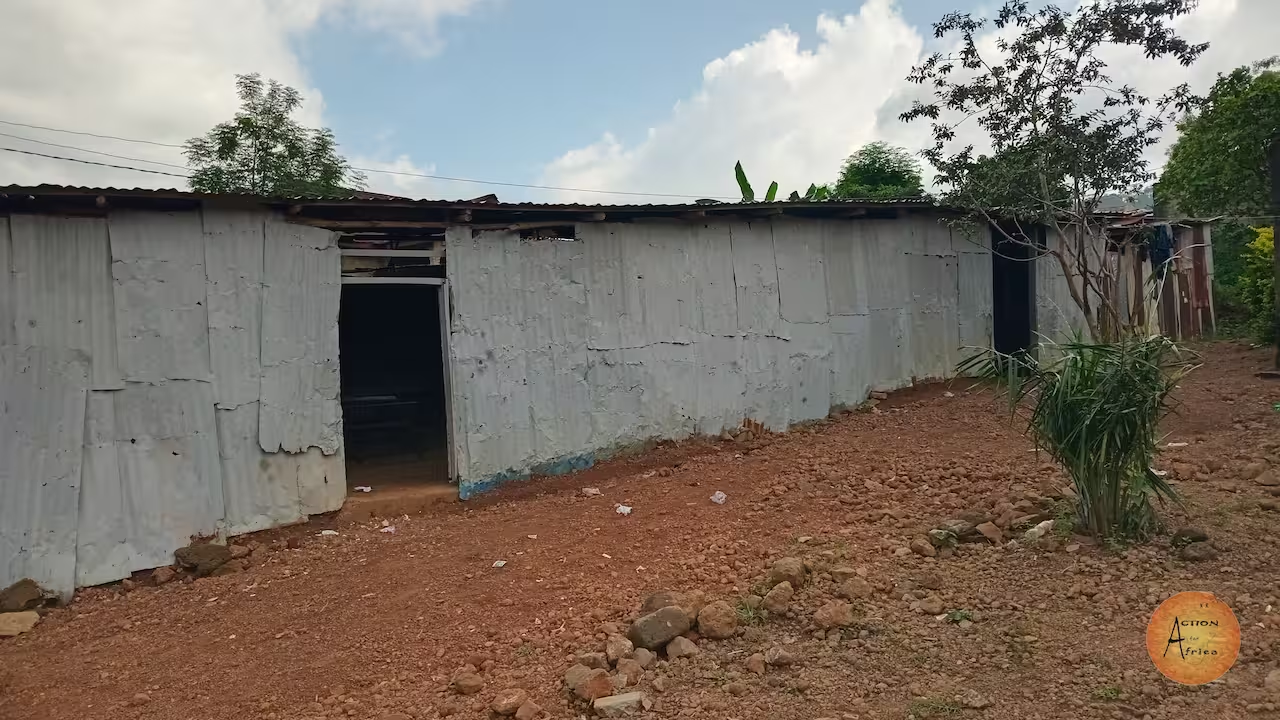
No school building One corrugated iron classroom No administrative building Lack of sanitation facilities Lack of electricity and water
600 children
1 school building with 12 classrooms
1 multi-purpose hall
1 administration block
1 staff room
6 toilet blocks
1 borehole/water pump
1 electrical/solar system
310 desks and benches
70 sets of teaching materials
25 office desks and chairs
80 school kits
Received
Associations: Action For Africa
The school has many children and few classrooms, hence some classes have almost seventy students in one class. This leads to poor perfomance since the teacher cannot manage such big number. The total number of students is 1756.

Groupe Scolaire Zaza (GS Zaza B)
Classroom shortage Overcrowded classrooms (over 70) Lack of teaching materials
100
3 new classrooms
1 multi-purpose hall
1 IT room
1 water borehole
1 electric and solar system
150 desks and benches
10 office desks and chairs
30 packs of teaching materials
250 school kits
Received
Associations: Action For Africa


